Last Cradle / CT-03
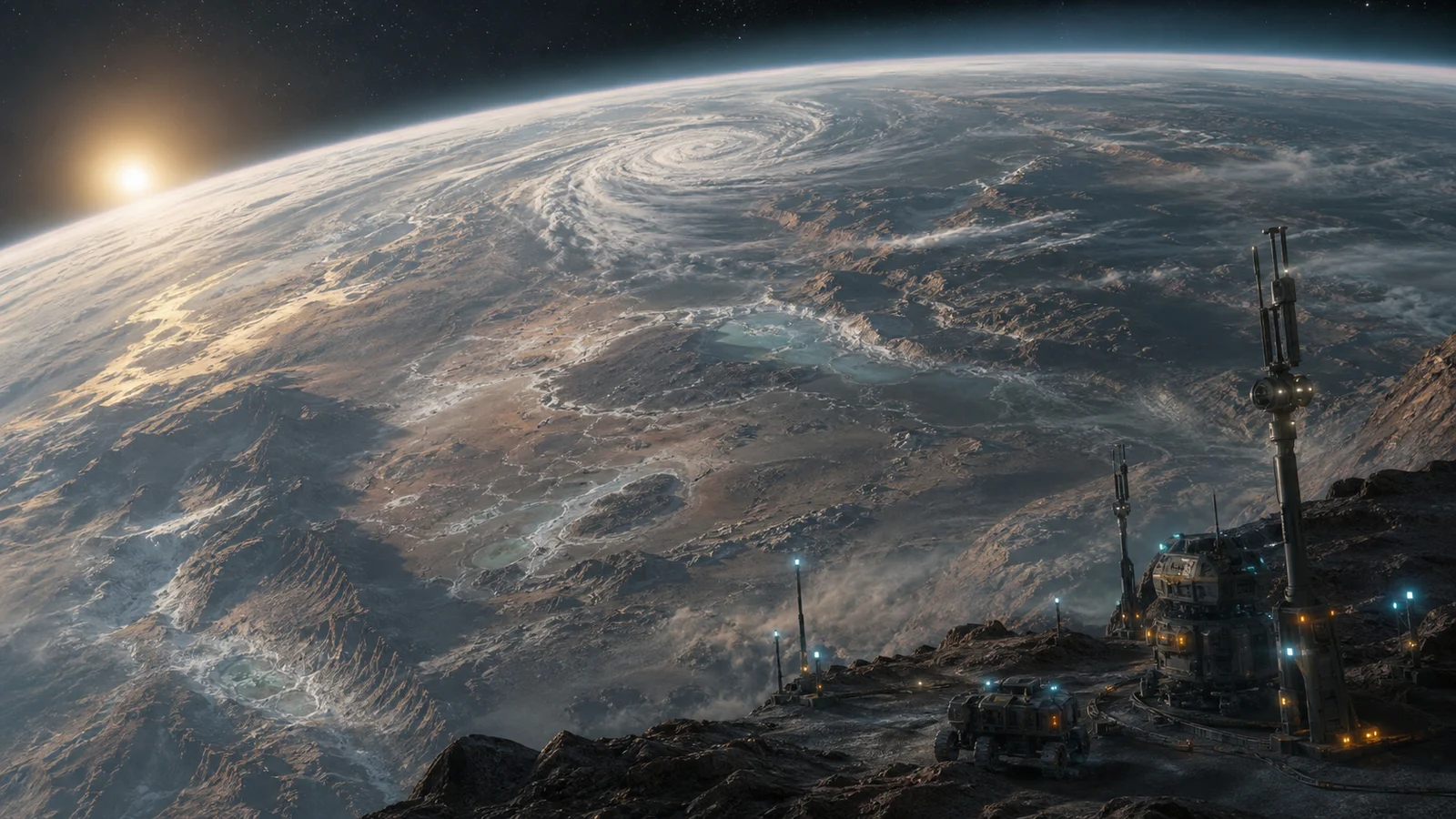
Last Cradle is the public name of Cradle Target-03, the super-Earth selected by the Cradle Initiative after a long candidate survey. Older archive fragments may refer to the same target as Kepler-452b. Mission Control keeps that alias only for continuity.
The planet is not a promised land. It has liquid water, atmosphere, mineral wealth, magnetic protection, and long-term terraforming potential. It also has unstable climate patterns, chemically difficult water, soils that reject Earth crops, slightly elevated gravity, mineral dust, and possible native ecological traces.
Baseline Conditions
- Classification: terraformable super-Earth.
- Mission catalog: Cradle Target-03.
- Early alias: Kepler-452b.
- Gravity: above Earth standard, enough to shape medicine, construction, and logistics.
- Air: present, but not safe for long-term unaided breathing.
- Water: present, but not safe by default.
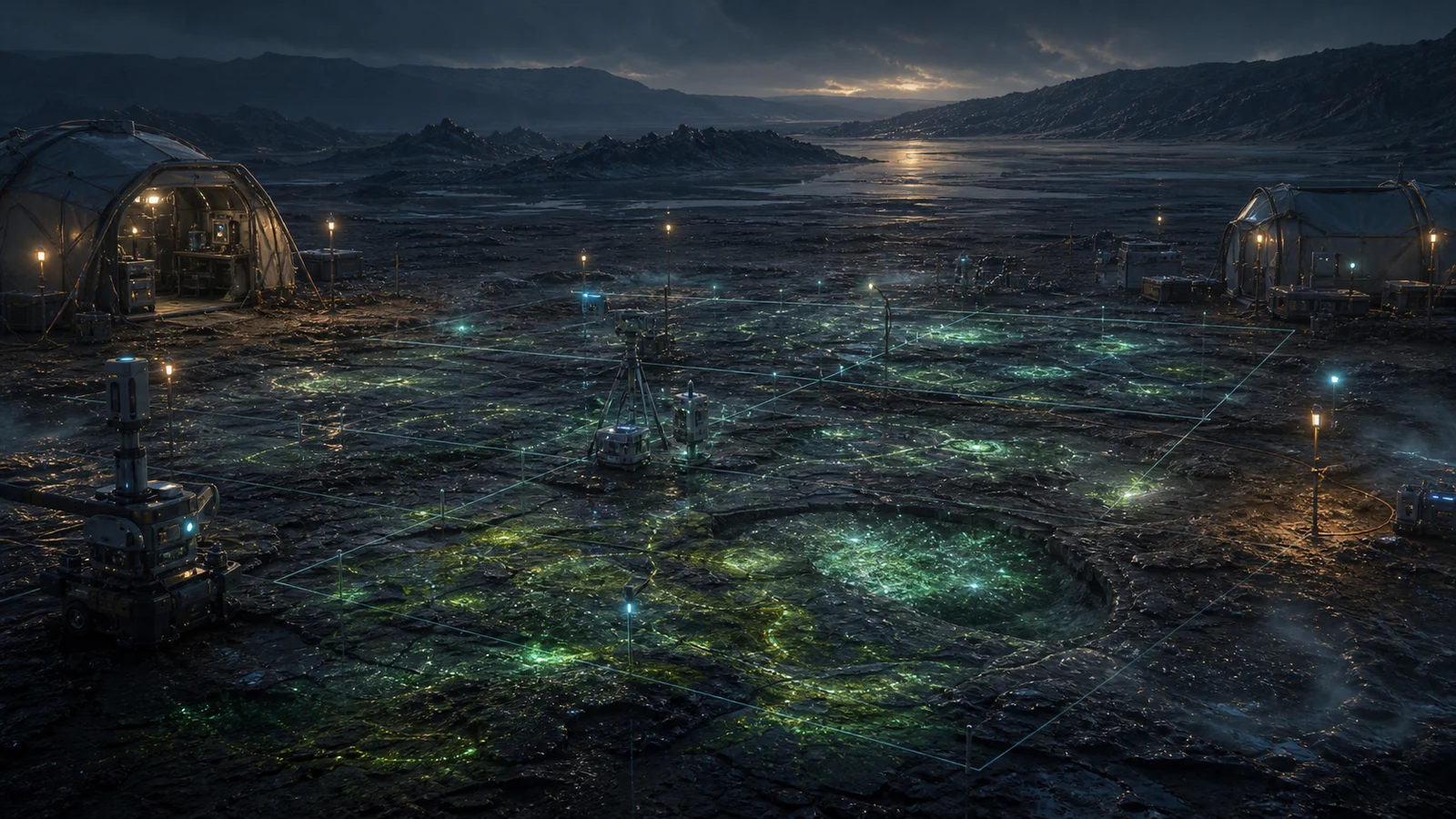
- Soil: chemically active, biologically uncertain, and unsuitable for Earth crops without treatment.
- Ecology: unknown native or prebiotic signals remain under review.
Why It Was Chosen
Last Cradle was not perfect. It was the least impossible candidate: close enough to habitability for slow engineering, rich enough to support industrial restart, and stable enough for the ark to risk deployment.
Mars, orbital cities, underground Earth shelters, and lunar industry could preserve fragments. None could become a full second cradle at the scale required by the Initiative.
Settlement Logic
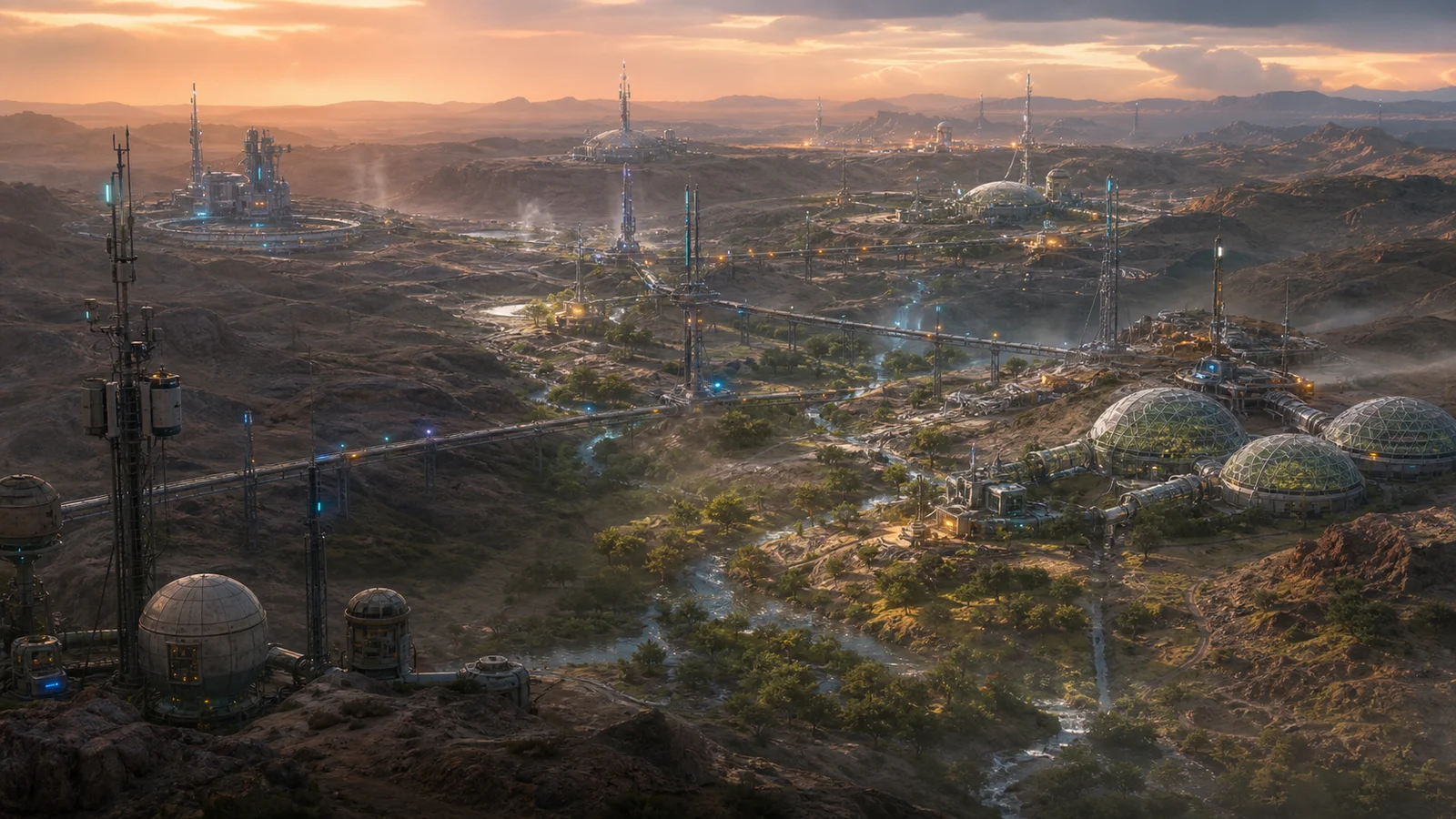
The surface is divided into operational sectors. Each sector is a tradeoff between water access, atmosphere processing, soil activation, ecological risk, industrial output, and local autonomy. The planet cannot be transformed by one central command. It must be understood region by region.
Design Principle
Last Cradle should feel survivable only when Operators accept that every gain creates pressure somewhere else.