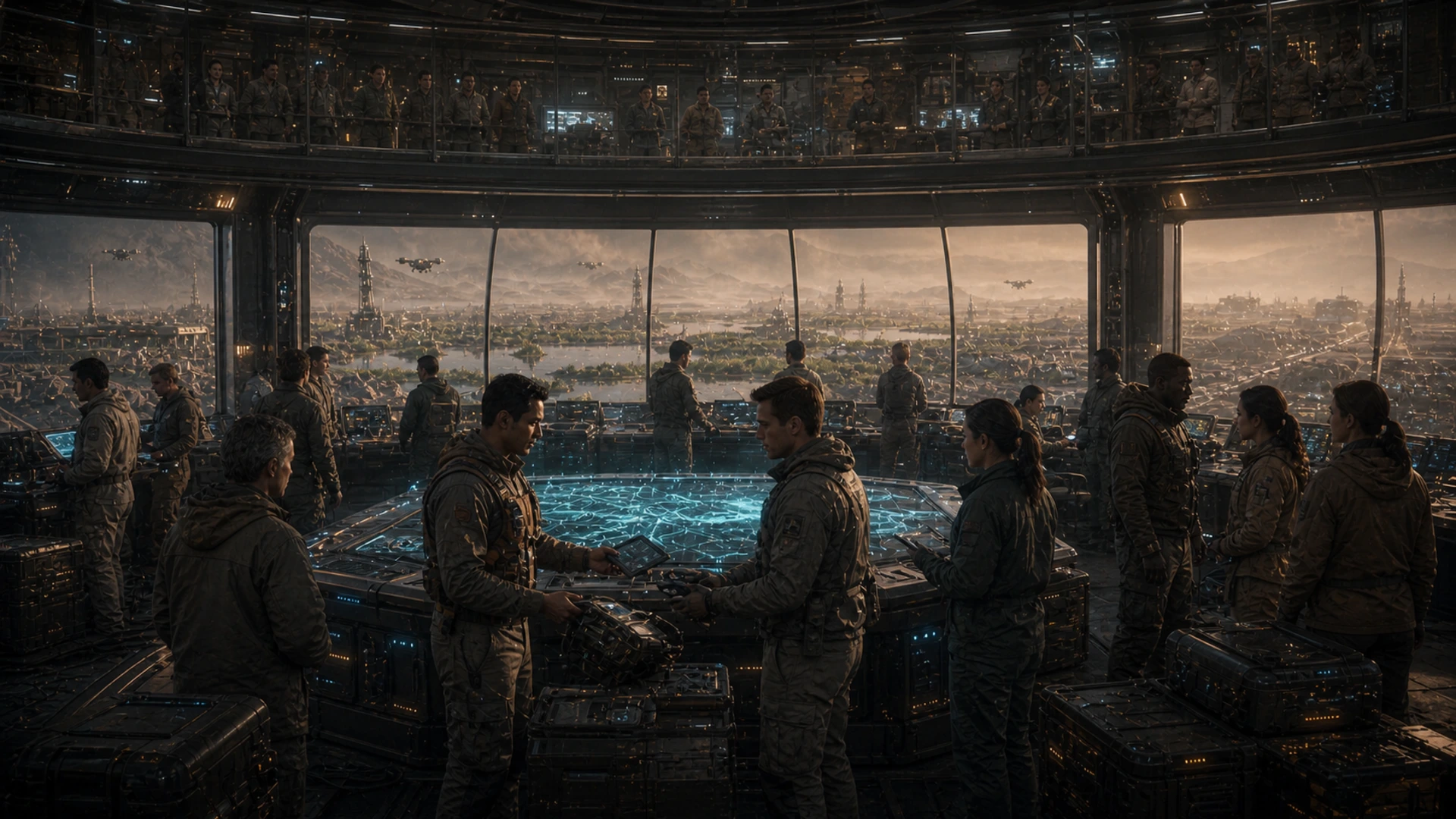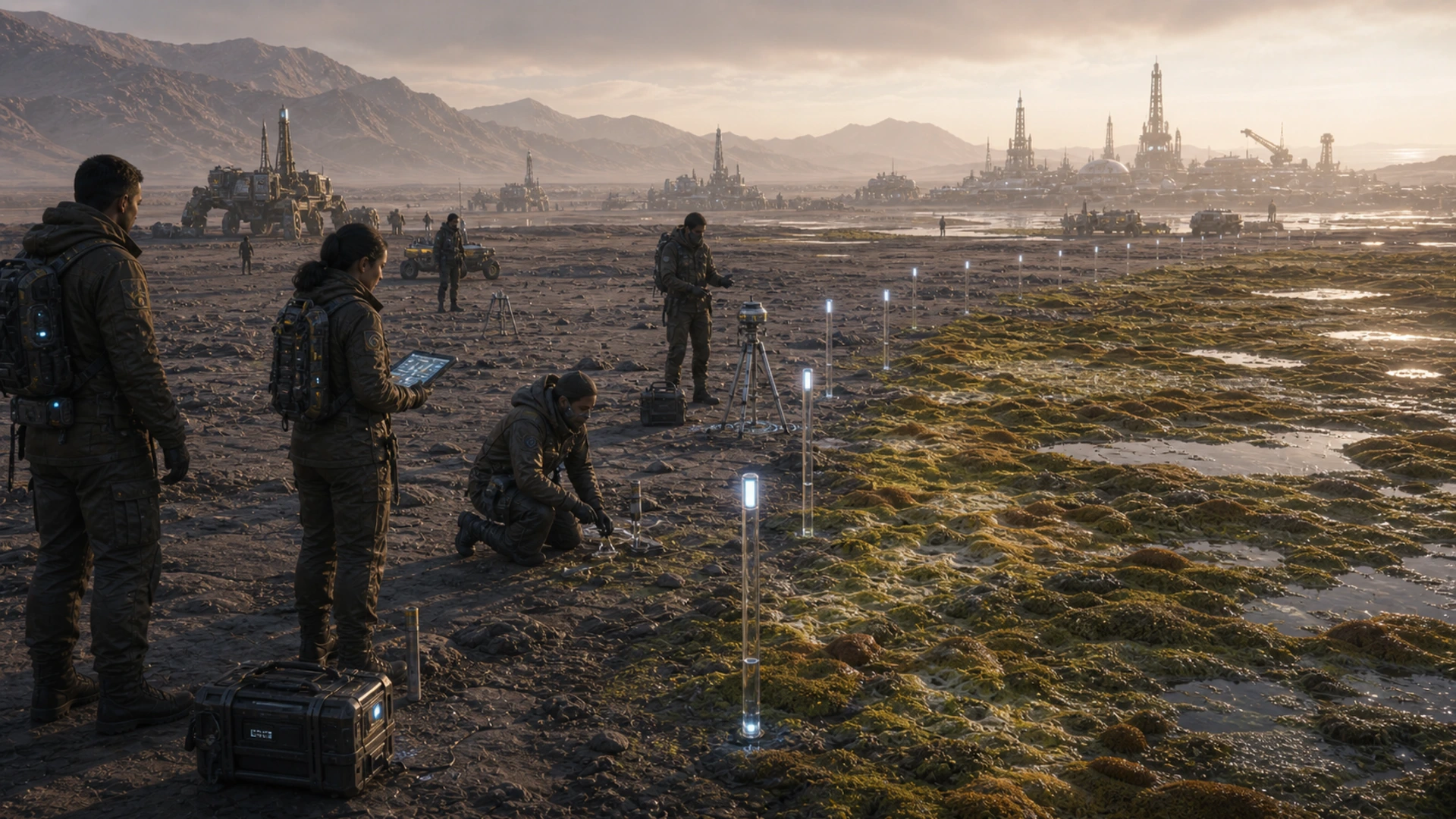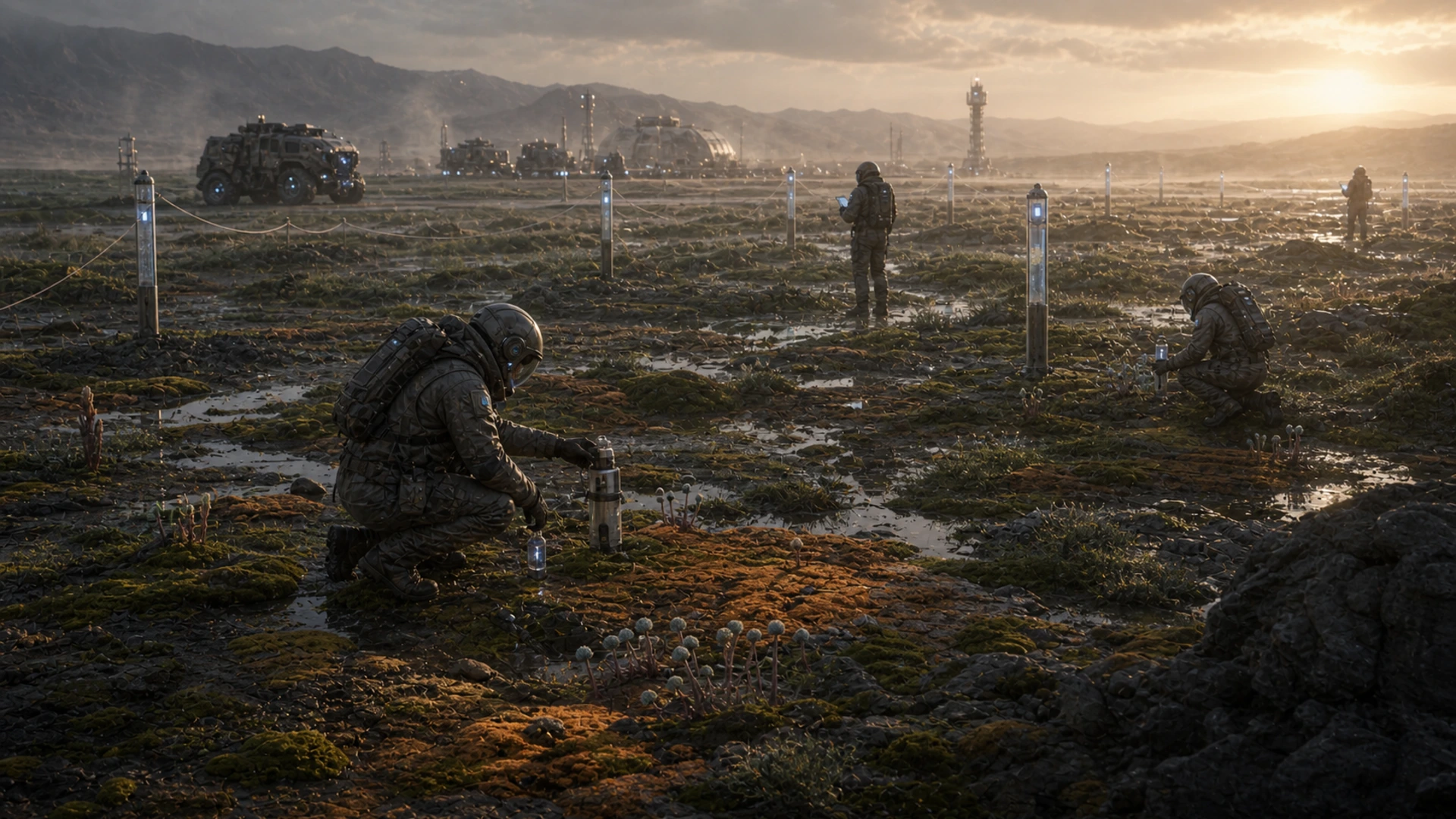
Season 07: Habitat Ring Protocol
Season 07: Habitat Ring Protocol is filed as a field-facing briefing, not a mythic chapter. It explains how a seasonal protocol for opening early habitat rings appears inside an Operator sector, how that local condition enters the global terraforming network, and why CRADLE-0 cannot turn the issue into a single automatic order. The briefing assumes Earth remains intact but strained, CT-03 remains a dangerous candidate cradle, and every useful action carries a future cost.
Operational Frame
The immediate problem is pressure safety and population demand move at different speeds. A sector team can measure the surface symptom quickly, but the responsible cause usually crosses water, power, atmosphere, soil chemistry, civic trust, and archive policy at the same time. That is why Mission Control treats Season 07: Habitat Ring Protocol as a system record instead of a decorative lore note. The entry should help a reader understand what can be acted on during a single cycle and what must remain under review across several cycles.
A regional Operator is not being asked to save CT-03 alone. The Operator is asked to keep one responsibility zone legible enough that its data can be trusted by neighboring zones, global engineering boards, and the First Generation observers who will inherit the consequences. The most useful local action is often modest: pause a risky build, add redundancy, expose uncertainty, or publish a metric before a faction can turn it into a slogan.
CRADLE-0 contributes forecasts, allocation warnings, anomaly clustering, and failure thresholds. It does not receive a blank mandate to override every human choice. In Season 07: Habitat Ring Protocol, the AI position should sound precise but incomplete: it can model probability and cascading failure, while civic legitimacy, cultural memory, and acceptable loss must remain visible to human review.
Player-Facing Reading
In play, Season 07: Habitat Ring Protocol should read as a practical pressure on base planning. It can change which building is urgent, which resource chain needs redundancy, which disaster stage is likely to escalate, and which public report becomes hard to ignore. The point is not to punish the player with a hidden rule. The point is to make a choice feel connected to the wider planet without making the player responsible for the entire planet alone.
The clearest version of the choice is: open limited ring capacity or delay for redundancy. If the Operator chooses speed, the sector may produce a measurable contribution sooner, but the global network inherits a larger uncertainty band. If the Operator chooses caution, nearby projects may slow down, but Mission Control gains a cleaner signal for the next global forecast. Neither path is written as heroic or corrupt. Each path solves one problem by moving pressure somewhere else.
Global Feedback
The global feedback loop should be visible in three places. First, population capacity should affect at least one public indicator, such as water-cycle integrity, ecological stability, pollution pressure, civic trust, or AI coordination. Second, the result should change the participation language of a global project. Third, the consequence should return to sectors as a new constraint, a warning window, a contribution request, or a dispute notice.
This is the content guardrail that keeps Last Cradle from becoming isolated base fiction. A local decision matters because many local decisions are aggregated, validated, disputed, and then sent back as planetary condition. If Season 07: Habitat Ring Protocol does not alter a global reading or a public confidence interval, it should remain a private maintenance note rather than a major archive entry.
Faction Pressure
The faction dispute around Season 07: Habitat Ring Protocol is best written as disagreement over method. Free Settlers and Cradle Authority dispute thresholds can argue for a route without becoming a villain, and the opposing route can carry a real risk without becoming stupidity. Terraform Union may prefer throughput and large engineering commitments. Native Balance Institute may demand slower contact with uncertain ecological systems. Cradle Authority may defend emergency coordination. Free Settlers may ask who owns the burden when a central plan fails locally. Archive Church may preserve Earth-derived continuity. Silent Core may ask whether machine coordination is being trusted too much or too little.
A good faction paragraph states what each side is protecting, what it is willing to spend, and what harm it may underestimate. That structure keeps the conflict useful for gameplay: the player sees an actionable route choice rather than a morality label.
CRADLE-0 Assessment
CRADLE-0 should close the record with a constrained assessment: current evidence, confidence band, likely failure mode, and recommended review interval. The AI should not plead, threaten, or declare itself correct by nature. It should make the cost of delay visible and leave the political meaning of that cost open to review.
For Season 07: Habitat Ring Protocol, the recommended assessment is that the next cycle should publish the uncertainty alongside the result. If the number improves but confidence collapses, the public record must say so. If confidence improves but construction slows, the record must say that too. Civilization backup only works if the new society can see the price of its own survival systems.
Scenario Hooks
- Regional task: inspect the local symptom, then choose whether to publish a cautious report or accelerate contribution.
- Global project hook: convert local work into a shared engineering milestone without implying one Operator completes the project alone.
- Faction hook: let at least two canonical factions propose defensible but incompatible procedures.
- Chronicle hook: record what changed after the cycle, including a consequence that returns to ordinary sectors.
- Website hook: expose the public metric, the dispute, and the next review window in Mission Control language.
Editorial Boundaries
Do not describe CT-03 as safe, destined, or already tamed. Do not imply Earth vanished. Do not give CRADLE-0 emotional motives. Do not let the First Generation become a reward counter. The useful tone is restrained pressure: a civilization can continue here, but only if its systems stay measurable, accountable, and willing to revise their own assumptions.